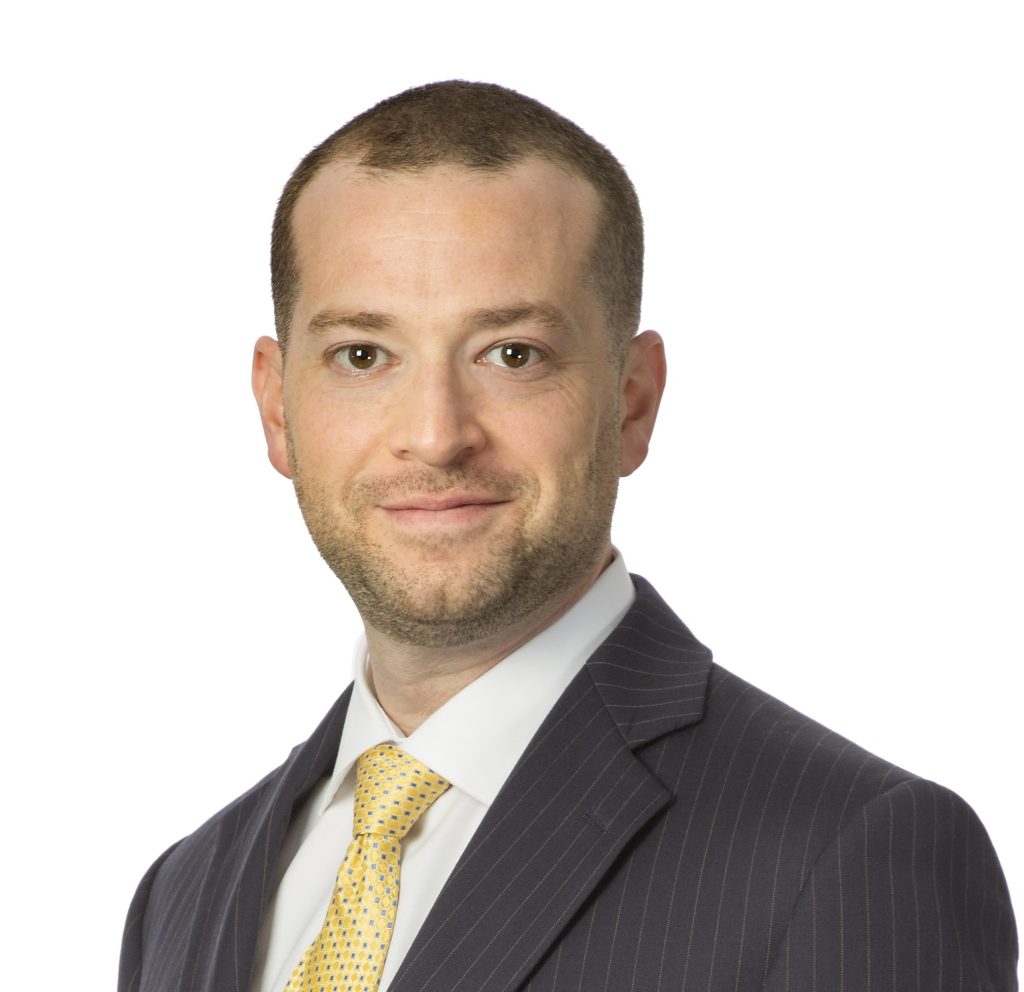
California DUI law has been shaped over decades by a handful of pivotal court decisions. These cases define what the prosecution must prove, what the police may do, and how the evidence can be challenged. I am Joel Brand, and here are the landmark cases every California DUI defendant benefits from understanding, because the principles they established are the same ones I use to defend cases today.
Mercer v. DMV (1991): "driving" means actual movement
In Mercer v. Department of Motor Vehicles, the California Supreme Court held that "driving" requires volitional movement of the vehicle. Merely sitting in a car, even in the driver's seat with the engine running, is not driving. This decision is the foundation of the no-driving defense and is why sleeping-in-the-car cases turn on the driving element: when no one saw the vehicle move, the prosecution may be unable to prove that element at all.
Burg v. Municipal Court (1983): the per se law upheld
In Burg v. Municipal Court, the California Supreme Court upheld the constitutionality of the per se offense, the law making it illegal to drive with a blood-alcohol level at or above the legal limit regardless of actual impairment. The court rejected the argument that the statute was unconstitutionally vague. This case cemented the two-pronged structure of California DUI law, the impairment offense under 23152(a) and the per se offense under 23152(b), that still governs every case.
Ingersoll v. Palmer (1987): the rules for checkpoints
In Ingersoll v. Palmer, the California Supreme Court held that DUI sobriety checkpoints can be constitutional, but only if they are conducted under strict, neutral guidelines: supervisory officials must make the operational decisions, the criteria for which vehicles to stop must be neutral, the location and timing must be reasonable, there must be adequate warning at the scene, and the detention must be brief. Advance publicity is one of the factors courts weigh rather than a strict requirement, since People v. Banks held that its absence does not by itself void a checkpoint. When a checkpoint fails to meet these standards, the stop can be challenged, which is why I obtain the operational plan in every checkpoint case.
Lake v. Reed (1997): hearsay at the DMV hearing
In Lake v. Reed, the California Supreme Court addressed how the DMV can prove its case at an administrative hearing, holding that the officer's sworn report and certain other hearsay can be admissible to support a license suspension. This is part of why the DMV hearing is tilted toward the agency, and it is also why subpoenaing the officer and attacking the foundation and reliability of the paperwork, as I cover in excluding hearsay at the DMV hearing, is so important.
People v. Bransford (1994): the per se offense and breath testing
In People v. Bransford, the California Supreme Court held that the per se offense measures the alcohol in the breath as the machine reads it, without requiring conversion through a partition ratio. The practical effect is that, for the per se count, the breath number stands on its own. This decision shaped how breath evidence is treated and framed the kinds of challenges that remain available to the defense.
People v. McNeal (2009): challenging the breath result on impairment
In People v. McNeal, the California Supreme Court held that a defendant may introduce partition-ratio evidence to challenge a breath-test result on the impairment offense, even though that evidence is not a defense to the per se count. The case recognized that breath testing rests on assumptions that vary from person to person, and it preserved an important avenue to attack the breath number where the prosecution relies on the impairment theory.
People v. Vangelder (2013): the limits of attacking breath tests
In People v. Vangelder, the California Supreme Court held that a defendant cannot attack the general scientific reliability of breath-alcohol testing as a whole, but can still challenge the accuracy and foundation of the specific device and test used in the case. This drew the line that governs breath-test challenges today: the fight is over the particular machine, its calibration, and its maintenance, which is exactly where the calibration defense lives.
Missouri v. McNeely (2013): warrants for blood draws
In Missouri v. McNeely, the United States Supreme Court held that the natural dissipation of alcohol in the blood does not, by itself, create an emergency justifying a warrantless blood draw. In most cases, officers must get a warrant before taking a nonconsensual blood sample. This decision opened a significant line of defense, the challenge to a warrantless blood draw, that can lead to suppression of the blood evidence.
Birchfield v. North Dakota (2016): breath versus blood after arrest
In Birchfield v. North Dakota, the United States Supreme Court held that a breath test may be administered incident to a lawful DUI arrest without a warrant, but a blood test generally requires a warrant or a valid exception. The court also held that a state cannot make it a separate crime to refuse a warrantless blood test. This case is central to how refusal allegations and blood draws are analyzed, and it interacts directly with California's implied-consent law.
Coffey v. Shiomoto (2015): the rising-alcohol argument at the DMV
In Coffey v. Shiomoto, the California Supreme Court addressed how the DMV may rely on the chemical test and reasonable inferences from the evidence at an administrative hearing, in the context of a driver's rising-alcohol argument. The case shapes how the rising blood alcohol defense is litigated on the administrative side and reinforces the importance of presenting solid evidence to support it.
Why these cases matter to your defense
Each of these decisions is more than legal history; it is a live tool. Mercer drives the no-driving defense, Ingersoll governs checkpoint challenges, McNeely and Birchfield open attacks on blood draws and refusals, and Vangelder and McNeal frame how breath evidence is contested. When I evaluate a case, I am looking for the facts that let me invoke these principles, an unwitnessed drive, a defective checkpoint, a warrantless blood draw, a poorly maintained breath machine. Understanding the law this way is the difference between accepting a charge and dismantling it. See how it all comes together in my top DUI defenses and the defenses guide.
Questions about how the law applies to you?
Which of these principles helps your case depends entirely on your facts, which is exactly what I review with you. Use the free case analysis on this page, or call me directly at (888) 271-6644. I answer my own phone, 24/7.
Related: Title 17 rules for California DUI tests.