
A California DUI runs on two parallel tracks: the criminal court case and the DMV's administrative action. Understanding the sequence takes a lot of the fear out of it. Here is how a typical case moves from the arrest to the final resolution.
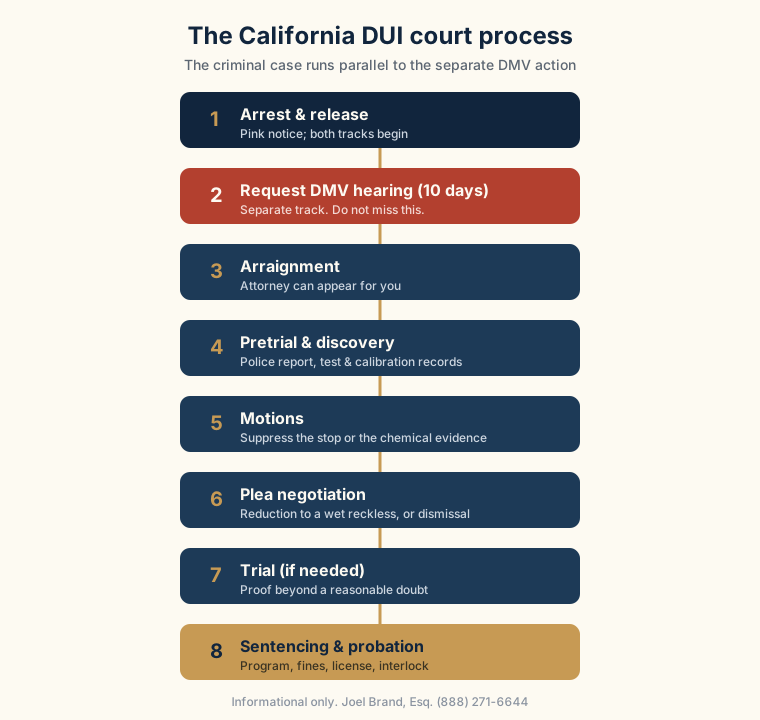
- Arrest and release. After a DUI arrest you are usually released, often the same day, with a citation and a notice of the suspension. The criminal case and the separate DMV action both begin here.
- Request the DMV hearing. Within 10 days, request a hearing with the DMV under Vehicle Code 13558 to contest the administrative suspension. This runs on its own track, parallel to the court case.
- Arraignment. At the first court date the charges are read and a plea is entered. For a misdemeanor, your attorney can usually appear for you, so you may not have to be there in person.
- Pretrial and discovery. Your attorney obtains the police report, the chemical test records, calibration and maintenance logs, and any video. This is where the strengths and weaknesses of the case come into focus.
- Motions. Where the facts support it, the defense files motions, such as a challenge to the lawfulness of the stop or to the admissibility of the chemical evidence. A successful motion can reshape or end the case.
- Plea negotiation. Most DUI cases resolve through negotiation. Depending on the facts, that can mean a reduction to a wet reckless, a dismissal of counts, or a favorable sentence. The quality of the underlying defense drives the offer.
- Trial. If no acceptable resolution is reached, the case can go to trial, where the prosecution must prove impairment beyond a reasonable doubt. Many cases settle before this point, but preparing for trial strengthens the negotiation.
- Sentencing and probation. On a conviction or plea, the court imposes the sentence: typically probation, a licensed DUI program, fines, a license condition, and an ignition interlock. Completing the terms is what closes out the case and opens the door to later expungement.
The two tracks run independently
The single most important thing to understand about this process is that the criminal case and the DMV action are completely separate, with different rules, different decision-makers, and different deadlines. The court decides guilt and punishment; the DMV decides only whether to suspend your license administratively. Winning one does not automatically resolve the other. A case can be dismissed in court while the license stays suspended because the DMV hearing was never requested, and conversely you can prevail at the DMV and still face the criminal charge. Keeping both tracks in view from day one is what prevents an avoidable license loss while the court case plays out.
Why the first ten days matter most
Of all the stages, the earliest carries the most weight, because the window to demand a DMV hearing is only ten days from the arrest. Miss it, and the administrative suspension takes effect automatically, no matter how the criminal case turns out. Requesting the hearing in time preserves your right to contest the suspension and can keep you driving in the meantime. This is why getting advice immediately after an arrest, rather than waiting for the first court date weeks later, can change the entire outcome on the license side. The criminal arraignment can wait; the DMV clock cannot.
Most cases resolve before trial
It is natural to fear a trial, but the large majority of DUI cases never reach one. They resolve through motions and negotiation, where the strength of the underlying defense drives the result. A successful challenge to the stop or to the chemical evidence can collapse the prosecution's case or force a favorable offer, and a well-prepared, trial-ready posture is itself what produces the best negotiated outcomes. Preparing every case as though it could go to trial is not about expecting a trial; it is about commanding the leverage that resolves the case favorably without one.
Where the case can be won at each stage
Each step in the sequence is also an opportunity. At the DMV stage, the administrative suspension can be defeated on the discovery packet's weaknesses. In discovery, the records reveal whether the stop, the testing, and the report hold up. At the motions stage, an unlawful stop or unreliable chemical evidence can be challenged and excluded. In negotiation, every weakness becomes leverage for a reduction or dismissal. Even at sentencing, strong mitigation shapes the terms. Understanding that the case is not decided in a single moment, but built or dismantled across all of these stages, is what allows a thorough defense to find the openings that matter.
How long the whole process takes
There is no single timeline, because a DUI case can resolve in a couple of months or stretch across the better part of a year depending on its complexity, the court's calendar, and the strategy. A straightforward case that settles early moves quickly, while one that requires extensive discovery, expert review, and contested motions takes longer, and sometimes that additional time works to the defense's advantage. What matters is not rushing to the first available resolution but reaching the right one, with every stage used to strengthen your position before the case is closed.
You usually do not have to face it alone or in person
Many people are surprised to learn how little of this process they may have to attend personally. For a misdemeanor DUI, your attorney can generally appear on your behalf at most court dates, so you can keep working and living your life while the case is handled. Just as importantly, you do not have to navigate the parallel tracks, the deadlines, the discovery, the motions, the negotiations, on your own. Having someone manage both the court case and the DMV action together is what keeps the process from becoming overwhelming and ensures no critical deadline or opportunity slips by.
Where you are in the process
Every stage has decisions that shape the outcome, and the earliest ones, especially the DMV deadline, carry the most weight. Get a free written case analysis below or call me directly to find out where your case stands. It also helps to read the first 10 days after a DUI and the California DUI glossary.
From the DUI blog: How long a California DUI case takes.
From the DUI blog: What Happens at Your First California DUI Pretrial Conference.
Primary sources
California statutes cited in this article, linked to the official text published by the California Legislature.