
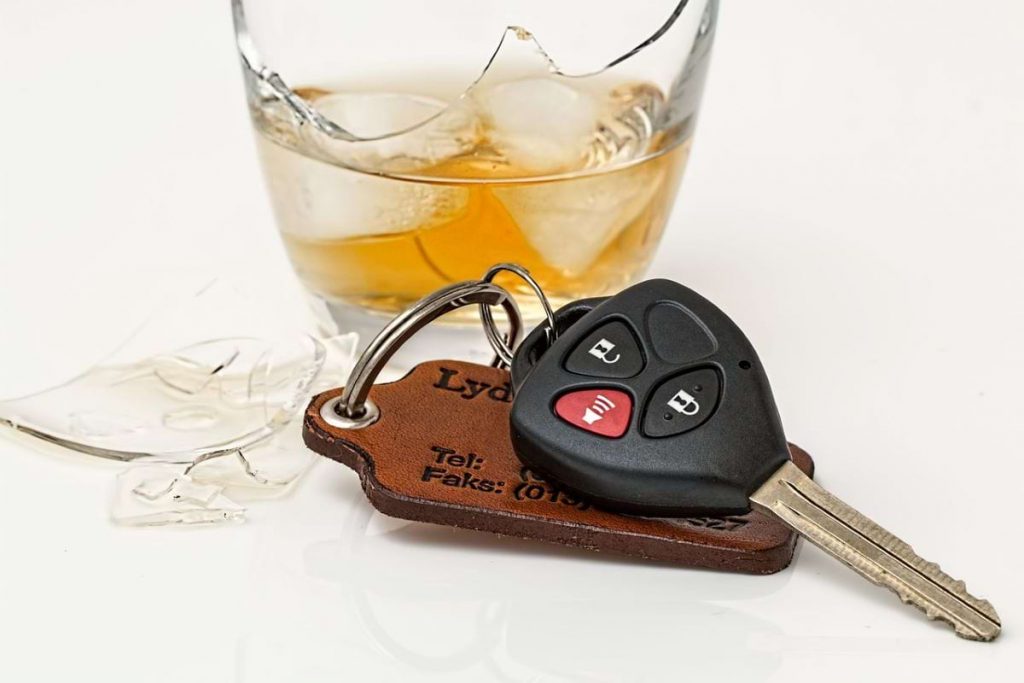
There are a number of DUI defenses that a skilled DUI attorney can raise to help you get the best possible result in your case. I understand the stress and uncertainty you are going through right now, and I have built my entire practice around defending California DUI charges. The case against you is rarely as airtight as it feels the night of an arrest. Below are 13 of the strongest defenses to a California DUI, ordered roughly by how often they end up mattering for the people who come to me. One or more of them may apply to your situation.
Defense 1: The Stop and Arrest Were Not Lawful (Reasonable Suspicion and Probable Cause)
Almost every DUI case begins with a traffic stop, which is the first thing I look at. If the original stop was made without reasonable suspicion, it is unlawful, and any evidence that came from it must be suppressed. If the officer did not have a lawful reason, such as a vehicle code violation, to pull you over, the case can fall apart because the prosecutor is left with very little to work with.
Reasonable suspicion may be enough for a stop, but an arrest requires probable cause. The question is whether the facts and circumstances within the officer's knowledge were sufficient to warrant a prudent person to believe you had committed a crime. I can argue that the officer lacked probable cause and arrested you without the legal basis to do so.
When the officer lacked reasonable suspicion to pull you over or probable cause to arrest you, I can file a 1538.5 motion to suppress all of the evidence that flowed from the stop. If that evidence is suppressed, the prosecutor often faces real difficulty proving the case, which can lead to reduced charges or a full dismissal.
Defense 2: Faulty Chemical Testing
Most DUI cases rise or fall on a breath or blood test, so the reliability of that test matters enormously. Breath machines are prone to error and must be constantly recalibrated, and they can still produce a faulty reading even when calibrated correctly. The result of a chemical test can be challenged when the testing procedures were not properly followed, or when the agency that maintains the device did not follow its own regulations. Scrutinizing how your test was administered and maintained is one of the most productive things I do on a DUI case.
Defense 3: Inaccurate Field Sobriety Testing
Nearly everyone who is arrested for a DUI is first asked to perform field sobriety tests, and those tests are far less reliable than they look. Many people, including the elderly and those with a medical condition, simply cannot be fairly evaluated by standard field sobriety methods. Did the officer administer the tests in full compliance with the requirements set out by the National Highway Traffic Safety Administration?
Were the tests administered on a flat surface, away from passing traffic? If the test was performed on uneven, rocky, or slippery ground, in heavy traffic, in wind or rain, or while you were wearing constricting shoes or high heels, there is a good chance those conditions affected your performance and the officer's conclusions.
Defense 4: Innocent Explanations for the Signs of Intoxication
Almost every police report lists the same handful of observations: bloodshot or watery eyes, slurred speech, and nervousness. There are often perfectly innocent explanations for these signs, including allergies, fatigue, eye irritation, embarrassment, frustration, or simple nerves. I can also argue that the odor of alcohol, standing alone, does not prove that you were too impaired to drive.
Defense 5: Innocent Explanations for Your Driving
I can challenge the claim that you were under the influence by offering alternative explanations for the driving the officer described. The vast majority of traffic violations are committed by sober people, and current research shows no link between drunk driving and speeding. I know how to draw out favorable testimony from the officer that highlights all of the things you did correctly behind the wheel.
Defense 6: Rising BAC
I can use the rising BAC defense when your result is close to 0.08% and your last drink was fairly close in time to when you were pulled over. Alcohol takes time to metabolize. A drink does not put you over the limit the instant you take it. Your BAC starts at 0.00% and gradually rises as your body absorbs the alcohol.
That timing lets me argue that your BAC was not over the legal limit at the moment you were actually driving. Imagine you were pulled over, failed the field sobriety test, and were taken to the station for a blood test that showed 0.09% an hour later. If your last drink was just before the stop, your BAC may still have been rising. It may have been 0.07% or lower when you drove and only reached 0.09% by the time the blood was drawn.
This is a viable defense because what matters is your BAC when you were driving, not when the test was finally taken.
Defense 7: Mouth Alcohol
Mouth alcohol can show that a breath reading was inaccurate. Did latent alcohol in your mouth contaminate the breath sample? Breath results can be skewed by burping or belching, by cough syrup and cold medicines, and by breath sprays, mouthwash, dentures and adhesives, braces, orthodontics, and even food trapped between your teeth.
Defense 8: You Were Not Under the Influence
If you are charged under VC 23152(a), the prosecutor has to prove that you were actually under the influence. A rebuttable presumption exists that you were not under the influence if your BAC was below 0.05%. (People v. Gallardo (1994) 22 Cal.App.4th 489, 496.) That means with a low BAC the prosecutor has to rely on evidence other than the number to prove impairment, which makes the charge under VC 23152(a) much harder to win.
Defense 9: Your BAC Was Under 0.08%
If you are charged under VC 23152(b), the prosecutor must prove your BAC was 0.08% or higher. When the chemical test shows a result below 0.08%, that evidence is a defense to the charge. It can also be raised at your DMV hearing to help you keep your driver's license.
Defense 10: You Were Not Driving
To convict you of a DUI, the prosecutor has to prove that you were driving the vehicle. This defense comes up more often than people expect, such as when someone is found parked or asleep, or after an accident that no officer witnessed. If the prosecution cannot prove that you were the one driving, the charge is vulnerable to reduction or dismissal.
Defense 11: Miranda Rights
Any incriminating statements you made can be suppressed if the officer failed to give you a proper Miranda warning, including your right to remain silent. That warning is required once you have been arrested and are being interrogated by law enforcement. When it is missing, the statements you made during that interrogation may be kept out of your case.
Defense 12: Unconstitutional Checkpoint
DUI checkpoints have to meet strict constitutional requirements, and an officer may not stop or arrest you simply for avoiding one. You are allowed to turn away from a DUI checkpoint by driving a different direction, as long as you do not commit a traffic violation or show obvious signs of intoxication in the process. When a checkpoint was not run by the book, the stop that came from it can be challenged.
Defense 13: Emergency Doctrine
Sometimes a person drives because every other option was worse. California recognizes a necessity defense for exactly that situation. It is narrow, and it is important to understand where it comes from: it is not written into the DUI statute itself. It developed through case law, and juries are instructed on it under CALCRIM 3403.
To rely on it, the defense generally has to show that you acted in an emergency to prevent a significant harm, that you had no adequate legal alternative, that driving did not create a greater danger than the one you were avoiding, that you actually believed driving was necessary, that a reasonable person would have believed the same thing, and that you did not substantially contribute to creating the emergency.
Two practical points decide most of these cases. First, necessity is an affirmative defense, which means the burden sits with the defense to prove it by a preponderance of the evidence, rather than with the prosecution to disprove it. Second, the "no adequate legal alternative" element is where these arguments usually succeed or fail. If calling 911, waiting, or asking someone else to drive was realistically available at the time, the defense rarely holds up.
No two DUI cases are identical, and the defense that ends up helping you may not be the first one on this list. The only way to know which of these apply is to have the police report, the chemical test records, and the device calibration logs reviewed line by line. That is exactly what I do for the people who reach out to me. You can start with a free, written case analysis built around the California Vehicle Code and your county of arrest, or call me directly at (888) 271-6644. I answer the phone myself, 24/7.
From the DUI blog: 9 common California DUI myths that can hurt your case.
Primary sources
California statutes cited in this article, linked to the official text published by the California Legislature.